 Best Decks
Current meta decks and rankings.
OpenThe wiki for Might & Magic Fates.
Like all TCGs, players have a deck to create and customize as they like to face an opponent. At the moment, the game is 1 vs 1.
This game currently features five factions: NECRO, INFERNO, ACADEMY, HEAVEN and a neutral one. Unlike other factions, however, the card-playing system and the phases themselves are slightly different. We'll also encounter new keywords and gameplay mechanics that may seem intuitive at first glance if you're used to other games. For this reason, we recommend following the initial tutorial, which is simple and sufficient to cover the basics. Therefore, this guide will assume the initial tutorial.
Quick introductions that you can skip if you want:
Let's start with a basic concept that is unclear to many new players:
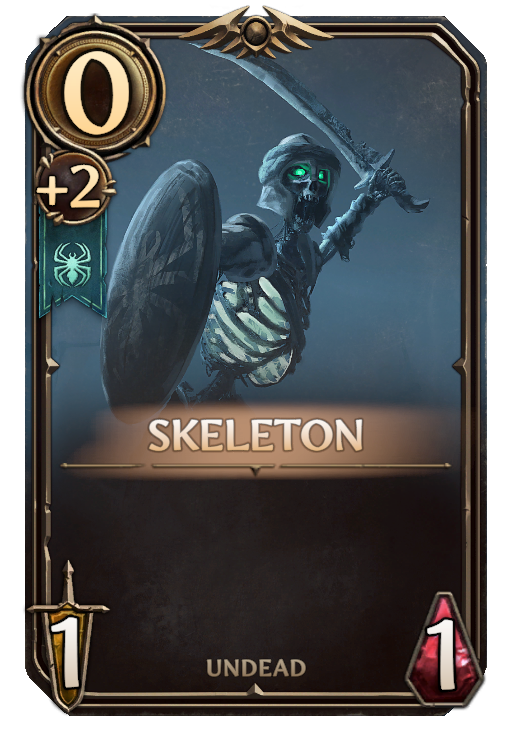
Playing cards requires gold, which is slightly different from mana wheel systems. Each card has a gold cost, and gold is produced by the cards themselves. This statistic is written in smaller letters below the card's gold cost. For example, here's a card that costs 0 gold but produces 2.
Some cards produce more or less gold (currently 1, 2 or 3) and there are other effects that help production.
To create a deck, you can use cards belonging to different factions, but this will incur a penalty, meaning that the card will produce -1 gold compared to the base production. For example, a NECRO faction card that produces 2 gold, if used to create an INFERNO faction deck, will produce 1 gold. This is always true except for neutral faction cards. You may have already noticed that the faction of your deck will depend on the hero chosen during deck creation.
The game system is round-based, as you've probably already discovered in the tutorial and your first few games. It features the interesting mechanic of leveling up heroes (they only level up if they attack or through effects) and unlocking powerful abilities. Remember that, except for certain card effects, once your summoning turn ends, you can't summon your creatures again until your next turn.
Once both players have completed the deployment phase, the combat phases alternate, with each player taking turns performing an action. The next round will begin when both players have completed their actions. Actions can be an attack by the hero or a creature, or the activation of a building (with its associated effect). Note that the game features a sword icon and a number indicating the available actions, which depends on the total number of creatures, buildings, and, of course, our hero. This allows all pawns on the board to perform their actions. Clearly, each pawn can only perform one action per turn. Why this strange system? If for some strategic reason—and it can happen—you decide to skip a turn, you'll lose a sword, a creature, or the hero won't be able to attack (or activate the building effect). Potentially, if you skip all your turns, you'll lose all your swords, and the turn will end without having performed an action.
Also remember that before each action you can play as many spells as you want, as long as you have enough gold. You can also do this during the initial placement phase, but sometimes it may be better to wait.
Clearly, the first player to reduce the opposing hero's life points to 0 wins. In the event of a tie, the player with the initiative, e.g., the use of Armageddon, wins.
Ranged: Attacks from a distance without taking damage and can attack creatures with flying.
Protector: Enemy creatures and hero must attack all creatures with protector first.
Stun: The affected target can't attack and deals no damage to creatures attacking it until the end of the round.
Death: the effect is activated upon death.
Fly: These units can only be attacked by other units with fly or ranged.
Activate: to be activated as an action, typical of buildings.
Deploy: the effect activates on deployment.
Strike: The specific effect activates when damage is dealt.
Dispel: remove magic buffs and debuffs (not hero effects).
Holy shield: protects from damage, causes magic or attack.
Flanking: The effect is activated if it attacks a target at any of the extremes.
Lifeleech: heals damage dealt, if health point goes to 0 temporarily, it survives.
Cleave: applies attack damage to adjacent targets.
Spell power: Increases the power of spells by the indicated number.
Immune to retaliation: Takes no damage when attack.
Shelve: add one more card to your hand in your next round (max 10 cards in hand, other are send to the grave).
Best Decks
Current meta decks and rankings.
Open Tips
TipsGuides and strategy tips.
Open Trade
TradeTrading and economy section.
Open